 English
 Español
 Português
 русский
 Français
 日本語
日本語 Deutsch
 ภาษาไทย
 한국어
한국어 العربية

How Can Self-propelled Vertical Mast Lift Improve Modern Aerial Work?
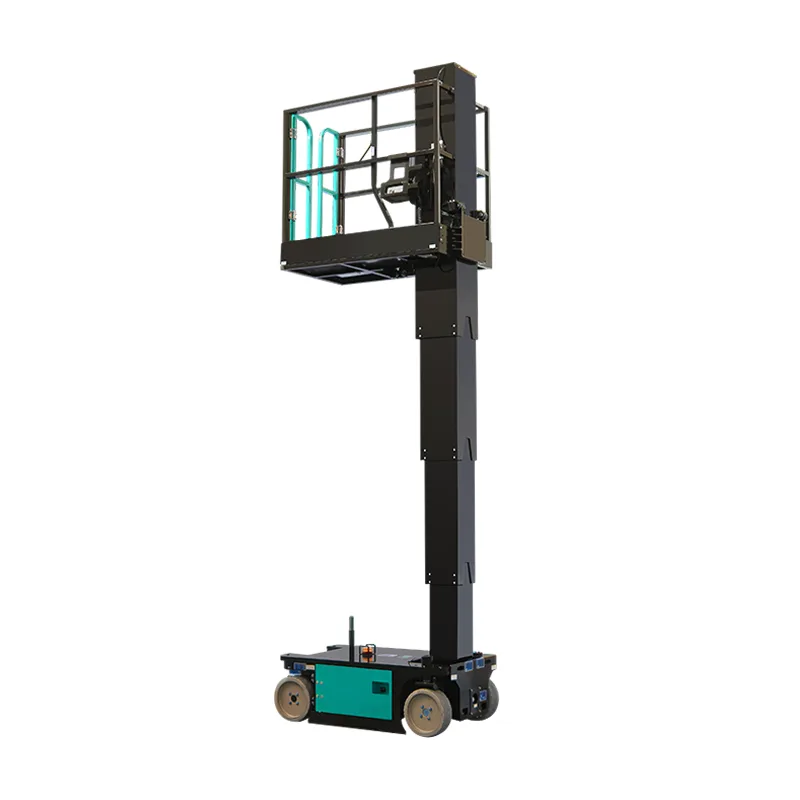
The aerial work platform industry is continuously evolving as companies seek safer, more flexible, and more efficient solutions for elevated operations. Modern workplaces require equipment that can adapt to different environments while helping operators complete tasks with greater precision and reliability. A Self-propelled Vertical Mast Lift has become an important solution for applications that require compact access, easy movement, and stable vertical lifting performance in various professional environments.
Why Are Compact Aerial Access Solutions Gaining Attention?
Many industries require elevated access equipment for maintenance, installation, inspection, and repair tasks. However, traditional lifting methods may not always provide the flexibility needed in areas with limited space, narrow passages, or complex indoor layouts.
The development of compact aerial platforms has provided industries with more practical options. These machines are designed to support efficient access in environments where mobility, positioning accuracy, and operational convenience are important factors.
From commercial facilities to industrial plants, modern workplaces are increasingly focused on improving productivity while maintaining strict safety requirements. Equipment that combines a small working footprint with reliable lifting capability can help organizations manage elevated tasks more effectively.
Changing Needs in Indoor and Limited-Space Applications
Work environments are becoming more diverse, creating new expectations for aerial equipment. Warehouses, shopping centers, production facilities, and maintenance areas often require machines that can operate efficiently without affecting surrounding activities.
- Compact designs help equipment access restricted working areas.
- Flexible movement supports quick repositioning during operations.
- Stable lifting structures improve confidence during elevated tasks.
- Simple control systems help operators manage equipment more effectively.
- Efficient operation reduces unnecessary interruptions during projects.
What Makes Modern Aerial Equipment More Adaptable?
Adaptability has become a major factor in aerial equipment development. Different industries face different working conditions, so equipment manufacturers are focusing on creating solutions that can respond to a wider range of applications.
Modern lifting platforms combine mechanical engineering, control technology, and safety features to provide balanced performance. Instead of focusing only on lifting height or movement capability, manufacturers now consider the complete working experience, including transportation, operation, maintenance, and long-term reliability.
| Design Aspect | Development Focus | Application Advantage |
|---|---|---|
| Mobility System | Flexible equipment movement | Supports efficient positioning |
| Lifting Structure | Stable vertical operation | Provides reliable elevated access |
| Control Interface | Simplified operation management | Improves working convenience |
| Safety Features | Enhanced operational protection | Creates safer working conditions |
| Structural Design | Improved durability | Supports long-term professional use |
The Role of Engineering Optimization
Engineering optimization allows aerial platforms to achieve better performance while maintaining practical usability. Manufacturers must carefully balance machine size, stability, power efficiency, and operational requirements.
A well-designed machine should provide smooth movement, reliable lifting functions, and convenient maintenance access. These factors influence how effectively equipment can support daily operations across different industries.
How Are Different Industries Using Advanced Access Equipment?
Aerial work platforms are widely applied in industries where safe access to elevated areas is necessary. Construction companies use these solutions for installation, interior work, and facility maintenance. Industrial facilities rely on them for equipment inspection, repair tasks, and routine servicing.
Commercial buildings and public facilities also require efficient maintenance solutions. Lighting systems, electrical equipment, ventilation systems, and other elevated installations often need regular inspection and adjustment. Flexible aerial equipment allows maintenance teams to complete these tasks with improved efficiency.
- Construction Industry: Supports installation, finishing work, and elevated maintenance activities.
- Industrial Facilities: Helps maintain equipment and production environments.
- Commercial Buildings: Provides access for facility management and inspection.
- Warehousing Operations: Assists with maintenance tasks in storage environments.
- Public Infrastructure: Supports inspection and service-related operations.
Why Is Safety Essential in Elevated Working Environments?
Safety remains one of the most important considerations in aerial work equipment development. Working at elevated positions requires equipment that can provide stable support, predictable movement, and reliable protection features.
Manufacturers continue improving safety systems through better structural design, operational controls, and equipment monitoring functions. These improvements help create more controlled working conditions and reduce potential risks during elevated operations.
Supporting Operators Through Better Equipment Design
Operator experience has a direct influence on workplace efficiency and safety. Equipment with intuitive controls and practical operating systems allows users to complete tasks with greater confidence.
Clear operating procedures, regular inspections, and appropriate training are also important parts of safe equipment usage. Combining professional operation practices with reliable machinery creates a stronger foundation for workplace safety.
What Factors Should Be Considered When Selecting Aerial Equipment?
Choosing suitable aerial equipment requires an understanding of actual project conditions. Different applications may involve different requirements related to workspace limitations, operating environment, maintenance needs, and mobility expectations.
Organizations should evaluate equipment based on practical factors rather than focusing on a single specification. A complete assessment helps ensure that the selected solution can provide consistent performance throughout its service life.
Important Considerations for Professional Applications
- Working environment and available operating space.
- Required access capability for specific tasks.
- Equipment stability and operational safety features.
- Maintenance convenience and service support.
- Overall reliability during repeated professional use.
Professional equipment selection can improve workflow efficiency and help reduce unnecessary operational challenges. A suitable machine should match the requirements of the working environment while providing dependable performance.
How Does Technology Influence Future Aerial Work Development?
Technology continues to reshape the aerial work platform industry. Intelligent control systems, improved energy management, and advanced manufacturing methods are helping create equipment that is more efficient and easier to operate.
Future development will likely focus on combining performance with sustainability. Industries are increasingly interested in equipment that can reduce operational impact while maintaining strong productivity and safety standards.
Smarter Systems for Better Equipment Management
Digital technologies are creating new possibilities for equipment monitoring and maintenance planning. Smart systems can help operators and technical teams better understand equipment status and improve management efficiency.
As aerial work requirements continue changing, manufacturers need to maintain continuous innovation. Improvements in mechanical design, control technology, and user-focused features will remain important factors in industry development.
How Can Reliable Manufacturing Support Equipment Performance?
The quality of aerial work equipment depends heavily on manufacturing capability and quality management. Professional manufacturers need strong engineering expertise, production processes, inspection procedures, and technical support systems to ensure consistent product performance.
Reliable manufacturing also provides greater confidence throughout the equipment lifecycle. From initial production to long-term operation, quality-focused processes help maintain stability and reduce unexpected maintenance challenges.
Manufacturers with extensive industry experience are better positioned to understand different application requirements. By combining technical knowledge with practical market experience, they can develop solutions that better match real-world working conditions.
What Is the Future Direction of the Aerial Work Platform Market?
The aerial work platform market is moving toward greater specialization and efficiency. Different industries are looking for equipment that can provide specific advantages based on their working environments and operational goals.
Compact lifting solutions, environmentally conscious designs, and intelligent functions are becoming increasingly important trends. Manufacturers are responding by developing equipment that combines flexibility, safety, and productivity.
The growing adoption of Self-propelled Vertical Mast Lift solutions reflects the industry's demand for practical access equipment that can perform effectively in complex working environments. With continued innovation, these solutions will support more efficient and safer elevated operations across multiple industries.
Why Choose Foren as a Professional Aerial Work Platform Partner?
Established in two thousand four, Foren is a professional enterprise specializing in the aerial work platform industry. The company focuses on research and development, production, and sales of high-quality aerial work platforms, providing professional solutions for construction, municipal administration, logistics, energy, and other industries.
Foren has developed a comprehensive product portfolio including Scissor Lifts, Telescopic Boom Lifts, Articulating Boom Lifts, and other advanced aerial work solutions. The company is committed to improving workplace efficiency while supporting safer working environments through reliable equipment.
With a production base located in Guangde, Anhui, Foren has established strong manufacturing capabilities to support product quality and production capacity. Through continuous innovation, professional expertise, and customer-focused service, Foren continues to strengthen its position as a trusted aerial work platform partner serving global markets.
By focusing on safety, efficiency, and technological development, Foren remains dedicated to providing dependable aerial work solutions that meet the evolving needs of modern industries.
Previous:No News
Send Inquiry
-
E-mail
X
We use cookies to offer you a better browsing experience, analyze site traffic and personalize content. By using this site, you agree to our use of cookies.
Privacy Policy