 English
 Español
 Português
 русский
 Français
 日本語
日本語 Deutsch
 ภาษาไทย
 한국어
한국어 العربية

How Does a Tracked Scissor Lift Improve Safety and Efficiency?
Abstract: Tracked scissor lifts have become essential in construction, maintenance, and industrial projects, offering unparalleled mobility and stability. This article explores their advantages, applications, maintenance, and key considerations for selecting the right tracked scissor lift to ensure safety and efficiency on-site.
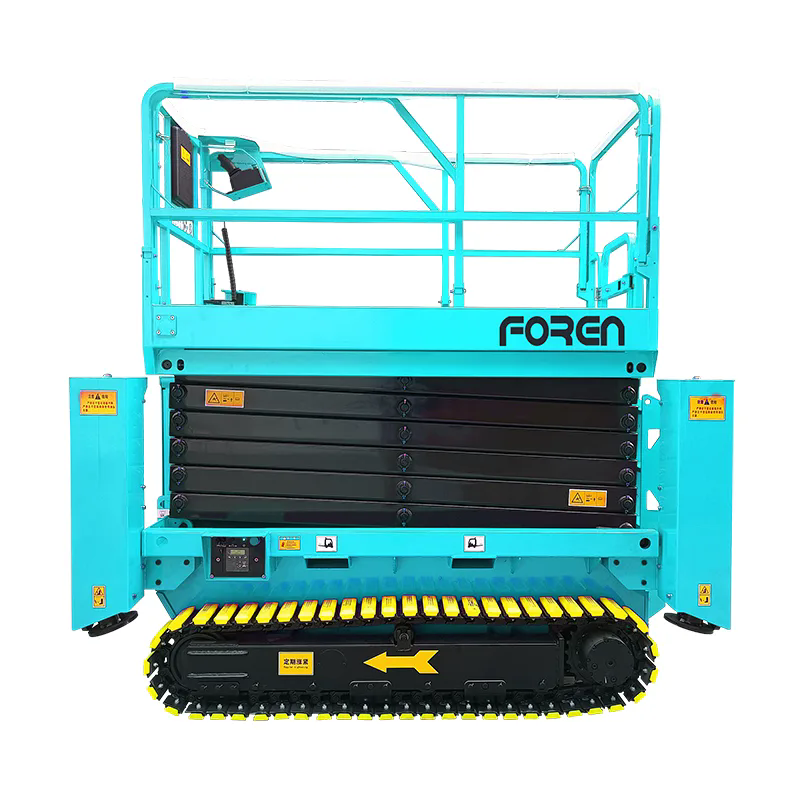
Table of Contents
- Introduction to Tracked Scissor Lifts
- Key Advantages of Tracked Scissor Lifts
- Common Applications
- How to Choose the Right Tracked Scissor Lift
- Maintenance Tips for Longevity
- Safety Best Practices
- Frequently Asked Questions
Introduction to Tracked Scissor Lifts
Tracked scissor lifts are specialized aerial work platforms designed to provide safe vertical access in areas where traditional wheeled lifts may struggle. Equipped with continuous tracks instead of wheels, these machines can navigate uneven terrain, muddy construction sites, and soft surfaces with ease. Unlike conventional scissor lifts, tracked models combine mobility, stability, and compact design, making them ideal for challenging job environments.
Modern tracked scissor lifts also include electric or hybrid power systems, offering quieter operation, zero emissions for indoor use, and increased energy efficiency. As project demands evolve, understanding the features, benefits, and maintenance of tracked scissor lifts is crucial for contractors, facility managers, and industrial operators.
Key Advantages of Tracked Scissor Lifts
- Enhanced Mobility: Tracks allow movement over rough terrain, sand, gravel, and slopes.
- Improved Stability: Lower center of gravity and broad base minimize the risk of tipping.
- Compact Design: Ideal for tight spaces where wheeled lifts cannot operate.
- Higher Safety Standards: Equipped with advanced control systems and emergency brakes.
- Eco-Friendly Options: Electric models reduce emissions, ideal for indoor use.
- Versatile Power Sources: Diesel, battery, or hybrid options to match project needs.
Below is a comparison table highlighting tracked scissor lifts versus wheeled models:
| Feature | Tracked Scissor Lift | Wheeled Scissor Lift |
|---|---|---|
| Terrain Capability | Uneven, muddy, slopes | Flat, solid surfaces |
| Stability | High | Moderate |
| Mobility in Tight Spaces | Excellent | Limited |
| Environmental Impact | Electric/Hybrid low emissions | Diesel/Combustion higher emissions |
Common Applications
Tracked scissor lifts are highly versatile and used across industries such as:
- Construction Sites: For indoor and outdoor elevated work, roofing, and scaffolding replacement.
- Facility Maintenance: Installing lighting, HVAC, and signage in large buildings.
- Landscaping and Agriculture: Tree trimming, orchard maintenance, and irrigation setup.
- Industrial Environments: Warehouse stock management, assembly lines, and overhead equipment repair.
Due to their tracked design, operators can safely reach elevated areas even in locations with soft soil or uneven terrain.
How to Choose the Right Tracked Scissor Lift
Selecting the correct tracked scissor lift involves analyzing project needs, environmental conditions, and budget constraints. Key considerations include:
- Maximum Working Height: Determine the height your tasks require and select a model accordingly.
- Weight Capacity: Include tools and personnel to ensure lift can safely carry the load.
- Track Type: Rubber or steel tracks affect surface compatibility and traction.
- Power Source: Choose electric, diesel, or hybrid based on indoor or outdoor use.
- Transport and Storage: Compact, foldable designs may ease transportation to multiple sites.
Refer to Foren’s Tracked Scissor Lift page for detailed specifications and model comparisons.
Maintenance Tips for Longevity
Regular maintenance ensures tracked scissor lifts remain safe and functional:
- Inspect tracks for wear and tear, and replace if necessary.
- Check hydraulic fluid levels and refill or replace as needed.
- Ensure battery health and proper charging procedures for electric models.
- Lubricate pivot points to maintain smooth lifting action.
- Perform routine safety checks on emergency brakes, controls, and alarms.
Implementing a scheduled maintenance program reduces downtime, improves safety, and extends equipment lifespan.
Safety Best Practices
Operating a tracked scissor lift safely requires adherence to industry standards and guidelines:
- Always wear a safety harness and helmet.
- Operate only within rated capacity and height limits.
- Check terrain conditions before maneuvering the lift.
- Ensure emergency stop functions are tested before every use.
- Train all operators on proper lift operation, including ascent, descent, and emergency procedures.
Frequently Asked Questions
- Q1: Can tracked scissor lifts be used indoors?
- A: Yes, electric or battery-powered models are ideal for indoor environments as they produce minimal noise and zero emissions.
- Q2: How does a tracked scissor lift differ from a wheeled lift?
- A: Tracks allow superior mobility over uneven terrain, while wheeled lifts are restricted to smooth surfaces.
- Q3: What maintenance is required for a tracked scissor lift?
- A: Routine inspections, track maintenance, hydraulic checks, and battery care are essential for safe and efficient operation.
- Q4: How do I select the correct model for my project?
- A: Assess working height, load capacity, terrain type, and power source to choose the most suitable lift.
Tracked scissor lifts are transformative tools for construction, maintenance, and industrial projects, combining safety, efficiency, and adaptability. Foren provides a range of high-quality tracked scissor lifts tailored to meet diverse operational needs. Contact us today to find the perfect solution for your projects.
Send Inquiry
-
E-mail
X
We use cookies to offer you a better browsing experience, analyze site traffic and personalize content. By using this site, you agree to our use of cookies.
Privacy Policy