 English
 Español
 Português
 русский
 Français
 日本語
 Deutsch
 ภาษาไทย
 한국어
 العربية


How Can Telescopic Handler Technology Improve Safety and Efficiency in Modern Work Environments?
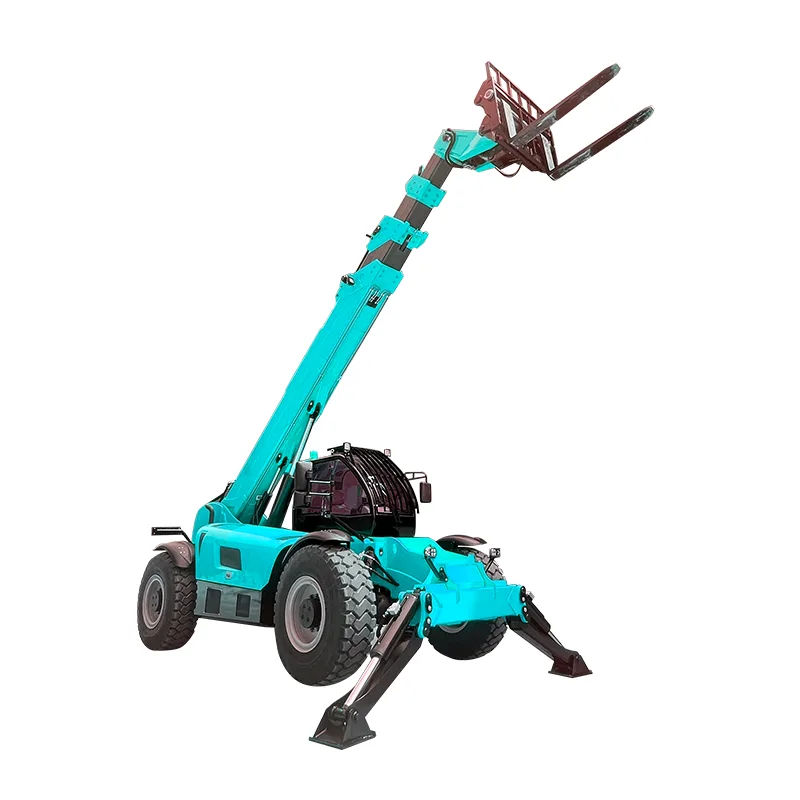
The aerial work platform industry is entering a new stage of development driven by safety requirements, operational efficiency, and intelligent equipment solutions. As construction sites, industrial facilities, and municipal projects become more complex, advanced lifting equipment is playing an increasingly important role in improving productivity while reducing operational risks. Telescopic Handler solutions are becoming a key choice for applications that require flexible material handling, extended reach, and reliable performance in challenging environments.
Why Is Equipment Innovation Changing Aerial Work Operations?
Modern industries require equipment that can adapt to different working conditions without sacrificing stability or safety. Traditional handling methods often face limitations when dealing with elevated operations, uneven terrain, or large-scale construction tasks. The development of multifunctional aerial equipment has created new possibilities for companies seeking safer and more efficient workflows.
Manufacturers are continuously improving structural design, control systems, and operational features to meet the changing demands of professional users. These improvements focus on enhancing machine adaptability, simplifying operation procedures, and supporting a wider range of applications across different sectors.
Growing Demand for Flexible Industrial Solutions
The demand for versatile lifting equipment continues to expand in industries such as construction, energy, logistics, and public infrastructure. Companies are looking for machines that can perform multiple tasks while maintaining dependable performance throughout long working periods.
- Enhanced mobility allows equipment to operate effectively in complex environments.
- Improved control systems help operators complete tasks with greater precision.
- Stronger structural designs support long-term reliability under demanding conditions.
- Flexible configurations allow equipment to serve various industrial applications.
What Features Define the Next Generation of Lifting Equipment?
The evolution of aerial work platforms is closely connected with technological advancement and user-focused engineering. Modern machines are designed not only for lifting functions but also for overall work efficiency, safety management, and operational convenience.
Manufacturers are paying greater attention to intelligent control, energy efficiency, and ergonomic design. These elements help create equipment that can support professional operations while reducing unnecessary downtime and maintenance requirements.
| Development Area | Industry Value | Application Benefit |
|---|---|---|
| Structural Optimization | Improved stability and durability | Supports demanding work conditions |
| Smart Control Systems | Better operational management | Enhances working accuracy |
| Safety Improvements | Reduced operational risks | Creates a safer workplace environment |
| Flexible Design | Wider application capability | Meets diverse project requirements |
Safety and Efficiency as Core Development Priorities
Safety remains one of the most important factors influencing equipment innovation. Reliable lifting solutions must provide stable performance, intuitive operation, and effective protection features to support workers in different environments.
At the same time, efficiency has become a major consideration for companies managing large-scale projects. Equipment that can complete tasks smoothly and adapt to changing conditions helps organizations improve workflow and achieve better resource utilization.
How Are Different Industries Benefiting from Advanced Lifting Solutions?
Aerial work equipment has become an essential part of many professional fields. In construction, it supports elevated installation, material movement, and maintenance activities. In logistics operations, it helps improve handling efficiency in warehouses and industrial areas. Energy and municipal projects also rely on dependable lifting solutions for infrastructure development and maintenance work.
The versatility of modern equipment enables companies to reduce dependence on multiple specialized machines. A single solution with strong adaptability can provide practical value across different working scenarios.
- Construction projects benefit from improved access and handling capabilities.
- Industrial facilities gain more efficient maintenance support.
- Energy projects receive dependable assistance for complex operational environments.
- Municipal services improve efficiency during infrastructure tasks.
What Should Companies Consider When Selecting Professional Equipment?
Selecting suitable aerial equipment requires careful consideration of application needs, working environments, safety expectations, and long-term service support. Professional users should evaluate whether equipment can provide consistent performance throughout different projects.
Important factors include manufacturing quality, technical capability, after-sales support, and the ability to provide customized solutions. Reliable suppliers with strong industry experience can help organizations achieve better operational results through appropriate equipment selection.
The Importance of Experienced Manufacturers
Experienced manufacturers play an important role in advancing industry standards. Through continuous research, engineering improvement, and customer-focused service, they help create products that better match real-world operational requirements.
Manufacturers with comprehensive production capabilities can provide stronger quality control and more reliable delivery support. This approach allows global industries to access professional equipment solutions that combine performance, safety, and durability.
Future Trends Driving the Aerial Work Platform Market
The future of aerial equipment will be shaped by automation, intelligent technologies, and sustainable development. As industries continue to pursue safer and more efficient operations, equipment manufacturers will need to develop solutions that offer greater flexibility and smarter management features.
Environmental considerations are also influencing product development. Energy-saving designs, optimized systems, and responsible manufacturing practices are becoming increasingly important across the global equipment market.
Telescopic Handler technology represents an important direction within this transformation by providing adaptable performance for various professional applications. With continuous innovation, this type of equipment will continue supporting industries that require reliable lifting and handling capabilities.
Why Is Foren Becoming a Trusted Partner in the Global Market?
Established in two thousand four, Foren has developed deep expertise in the aerial work platform industry, focusing on research, production, and sales of professional lifting equipment. The company provides solutions including Scissor Lifts, Telescopic Boom Lifts, Articulating Boom Lifts, and other advanced aerial work products for global industries.
With a strong commitment to integrity, engineering capability, and customer-oriented service, Foren continues to improve product quality and manufacturing capacity. Its production base in Guangde, Anhui, supports consistent performance and reliable supply for international markets.
By combining industry experience with continuous innovation, Foren is dedicated to delivering safe, efficient, and dependable aerial work solutions. The company continues to strengthen its role as a trusted partner for organizations seeking professional equipment support in construction, logistics, energy, and other demanding fields.
Send Inquiry
-
E-mail
X
We use cookies to offer you a better browsing experience, analyze site traffic and personalize content. By using this site, you agree to our use of cookies.
Privacy Policy